Friday, April 16, 2010

iPad printing: solved


Magical in its simplicity.

Thursday, February 4, 2010

20 years of Adobe Photoshop

Photoshop has been a part of every web designer’s life since they picked up their first mouse. On February 10th, 2010, Photoshop turns twenty. To mark this anniversary, I have come up with an article that takes you through the evolution of Photoshop from its modest beginnings as a bundled program sold with scanners to its current version.

Photoshop: Origins
One of the most impressive things about the company is the fact that one gifted family, consisting of an engineering prof, a PHD engineering student, and a talented special effects whiz working at Industrial Light and Magic came up with the core idea of Photoshop.
 
Thomas Knoll, the PHD student, is still heavily involved with Photoshop years later.  Glen Knoll was a college professor with two sons and two hobbies; computers and photography.   He had a darkroom in his basement, and an Apple II Plus that he was allowed to bring home from work.

Thomas Knoll adopted his father’s photography habit throughout high school, while his brother, John Knoll, purchased one of the first Macs available to the public.  Fast forward to 1987: Thomas Knoll was a PHD student studying Engineering at the University of Michigan. His brother was working at Industrial Light and Magic.

Thomas Knoll wrote a subroutine for a program to translate monochrome images on his monitor to grayscale.  The successful subroutine led Knoll to create more and very soon he had a number of processes for achieving photographic effects on digital images.  After his brother John saw what Thomas was doing, he recommended that Thomas turn what he was doing into a full-featured image editor.


The combination of Thomas’ programming abilities with John’s pragmatic design background led to a collaboration between the two brothers to develop more processes and improve on the initial application.  Even though the process led to interruption in Thomas’ thesis work, the brothers released “Image Pro” in 1988.  John suggested that they begin to sell Image Pro as an application.
 
Within six months, the brothers had a partnership with a company that manufactured scanners, Barneyscan.  They purchased 200 copies of the program to ship with their scanners.  They called on Supermac and Aldus, but were turned away at both, a move that Aldus would come to seriously regret.
 Shortly after, the Knoll brothers struck gold when they won over Adobe management with their product, and formed a licensing partnership with Adobe that was to launch their software and Adobe into the stratosphere.  In February of 1990, Adobe 1.0 was released. 

Photoshop Through the Years; Version Changes
I have included major changes within each version and some minor ones.
1990 – Photoshop 1.0
John Knoll, Thomas’ brother, wrote “special effects” for the program which were frowned upon by Adobe staff as being too “gimmicky”. Thomas and John found a way to sneak them into Photoshop as plugins, giving rise to what is now a huge cottage industry in add-ons to the popular program.

John and Adobe staff constantly pushed Thomas to make improvements until the final product shipped.  The first version of the Photoshop splash screen features just four Photoshop programmers. In subsequent versions, more and more names are added to the list. In more recent versions, a limited number of Adobe VIP’s appear in the splash screen.
 
1991 – Photoshop 2.0
Photoshop 2.0 included the Path feature, which allowed users to trim around an object easily and to save that path for future use. This feature was added by a second engineer, Mark Hamburg, that Adobe hired to work on the application.
Up until 2.0, Thomas Knoll was the only engineer working on it. Adobe called Mark the “Path Man”. 2.0 also featured rasterizing for Illustrator files, support for CMYK colour which led to widespread Photoshop adoption by the printing industry, and the Pen.  Photoshop 2.0 also required 4 megabytes of RAM to run rather than 2, which really helped program stability.

Photoshop 2.5, released in 1992, was notable for being the first release for the Windows operating systems.The code had to be completely changed in order to accomplish this goal which meant that the first effort was slow going.  
16-bit file support and palettes were added to this version as well. The initial Windows release had a “memory bug”, a bug which actually saw Mark Hamburg offer to make house calls. The patched version was released as 2.5.1. Filters got their own menu in 2.5 as well. The workspace shot below is of Photoshop 2.5 for the Mac.

1994 – Photoshop 3.0
The big story for Adobe Photoshop 3.0 was layers. Layers were and are a lifesaver for any marginally complex design.  Prior to their introduction, designers would save different versions of designs so that they could go back and grab them if needed; layers made this practice redundant.
Layers are individual slices of the image that go together to make the final “sandwich” of the image. Different images, such as those used in the image above in the 3.0 splash screen, are assigned their own layers, making it easy to work on those images without tampering with other areas of the image.
 Thomas Knoll, the original creator of the program, was responsible for their development. Other engineers made improvements in the program’s performance with Power Mac chips and bringing the Windows version up to the same level as the Mac version. Tabbed palettes also had their debut in 3.0.
 Adobe engineers included Adobe Transient Witticisms (ATW) with this version. They were little Easter Egg funny one-liners that would appear only when you pressed obscure combinations of keys.

1996 – Photoshop 4.0
Adjustment layers and macros were the two most notable features of Photoshop 4.0.  Adjustment layers allow the designer to apply one effect to a group of layers. Macros, or actions in Photoshop speak, allow you to map a series of commands to one command. This allows you to perform the same operation in much less time if you have a bunch of images to work on.
The most important change to 4.0 was the unification of the user interface with other Adobe products, a feature which Adobe has stayed consistent with right up to present-day incarnations of the program. This meant a less steep learning curve for Adobe products, a blessing for those who got their start with Photoshop 4.0.

1998 – Photoshop 5.0
The two most important features released with 5.0 were editable type and the ability to undo actions multiple times in the “History” palette.  Previous versions of Photoshop allowed text to be added, but the fuzzy rasterized type didn’t make for pretty magazine mastheads or decent web menus. This was a huge step forward. Multiple undos via the History palette were very helpful, especially since designers were starting to use the new Adobe tools for increasingly complex designs.
 Color Management made its debut with 5.0. Like other major changes to Photoshop, it was greeted with equal parts of praise and condemnation. It allowed colors to be managed natively within the application rather than relying on third-party tools that had been used, a huge improvement.  However, it also automatically converted the colors when opening files, a “feature” that engineers quickly eliminated after multiple user complaints. The magnetic lasso tool debuted in 5.0, making selecting areas of an image to work on much easier. 


1999 – Photoshop 5.5
Photoshop 5.5 featured the huge time saver, “Save For Web”. This feature allows those who choose it to save the image in a preset specifically designed for web use which allows the user to adjust image quality to achieve a smaller image.  Version 5.0 had failed to take the Web into account with all of its other major feature changes on the table. It was also bundled with ImageReady, a standalone program that was purpose-built to edit web graphics.
Most of the features of ImageReady were later incorporated into the full version of Photoshop and the idea of a simpler program was reborn eventually in the form of Photoshop Elements.

2000 – Photoshop 6.0
The layer styles panel made working with layers even easier in Photoshop 6. Vector shapes were also added in this release; the ability to draw vector shapes such as arrows into a bitmap was lauded by users.  There was also a new custom shapes palette that allowed the user to draw using vector shapes rather than just using lines. Text could also now be typed directly onto a picture, rather than being typed first into a text box.
Multi-layer functions made their first appearance with version 6.0. The Blending Options dialogue was also introduced which made blending various elements of an image much easier. 6.0 separated the crop tool from the marquee tool, making it that much easier to get to this commonly used command.

2001 – Photoshop Elements
With the increasing complexity of the tools available to users, Photoshop was risking losing a significant market share that didn’t understand or need some of its more advanced tools.   In order to combat this, they released Photoshop Elements in 2001. The new product was a success, and designers continue to recommend it to clients for simple image resizing and other non-design tasks.
While its current interface isn’t intuitive for those trained in traditional Photoshop, it is highly usable and labeled clearly for the average user. If there are any problems with it in terms of functionality, the simple answer is to upgrade to the full-featured Photoshop.

2002 – Photoshop 7.0
Version 7.0 introduced the healing brush and text that was fully vector-based. More importantly to veteran users, it introduced a new file browser that let designers easily pore through folders to find the graphics that they wanted.  Files within a folder could be renamed using Batch Rename, plus a bunch of other helpful commands that made working with a high volume of files much easier.  Workspaces could also be created and saved, allowing you to save your file locations and groups for future use.
The brush palette also featured a number of changes, including the new healing brush tool, patch tool, and the ability to create custom brushes. Spell check and a find/replace feature rounded out the updates to the text tool.  A number of enhancements were also included for web use, including the addition of rollover effects for images and a web gallery feature.
One of the most important upgrades was under the hood; 7.0 was optimized for use with Mac OS X, virtually eliminating crashes in the middle of working on large files. The tool presets palette let users program presets for commonly performed tasks, increasing efficiency.

2003 – Photoshop CS
Photoshop CS was the first to employ the CDS (counterfeit deterrence system) which recognized and refused to allow duplication of paper currency.  Scripting support for various web languages, including JavaScript, was also new to this release.
Layer groups were introduced with this version, which allowed various layers to be grouped together for effects to be applied to some and not others.  Improvements to the File Browser made images easier to work with, and the 16-bit and better large file support made CS much easier to work with for designers who constantly worked with larger images and photographers.

2005 – Photoshop CS2
The red eye removal tool, previously exclusive to Elements, was popular enough to make an appearance in the core version of Photoshop. Smudging options and the ability to select multiple layers also added to the functionality of Photoshop.
The Vanishing Point tool allowed users to edit images in perspective. The largest moment of panic when upgrading to PS2 came for most when they tried to find the Paint Bucket tool, which had been classified under the Gradient tool. There were other significant changes to the UI that prompted one writer to put out this “Where’s My Stuff?” column.
Layers and the layers palette were other areas of note. The “links” column was removed because CS2 included a link button rather than the small chains beside each layer. The “Smart Object” feature was introduced, which allows the user to scale a layer up without significant loss of quality.
 
2007 – Photoshop CS3
A faster load was probably the most noticeable feature of this 2007 release. It included fine tuning to a number of its existing tools rather than focusing on new ones.  The most notable new feature was graphic optimization for mobile devices, a feature which many web designers focusing on mobile design were thankful for. This version also saw significant feature updates to Adobe Camera RAW, a Quick Select tool, alterations to core commands like Brightness and Contrast and Black and White conversion.
CS3 shipped in Standard and Extended editions. The Extended version was intended for high end video and scientific users. Improved performance for Intel-based Macs significantly improved the speed of Photoshop, while Windows users also enjoyed performance upgrades. The new Quick Selection tool put the rest of the selection tools in Photoshop to shame with easy object selection with one or two strokes.  Cloning became easier in CS3 with the birth of the Clone Source palette which increased the options available to the Clone Stamp tool in an easily accessible palette.

2008 – Photoshop CS4
The smoother pan and zoom allowed for fast drill down on the areas of an image that you wanted to look at. Prior to this, there was a lag time of a few seconds (depending on your system) if you wanted to zoom in or out on an image.  The Masks and Adjustments panel was added, making working with masks easier. CS 4 also dealt with edges on masks more effectively. Colour correction took a huge step forward with this release.
The user interface was significantly simplified in CS4. The support of tabbed documents made it much easier to use and the main tools were added to the title bar for easier access. Quick access for common actions was made available in the panel area.

Where Are The Knolls Now?
Thomas Knoll was the lead developer of Photoshop right up until CS 4. He now leads up the Camera Raw plugin for Photoshop, which allows Photoshop to develop a smooth handshake between different models of camera raw image formats.

John Knoll  is still employed by Industrial Light and Magic as a Visual Effects Supervisor. He was the Visual Effects Supervisors for the recent efforts on the first three Star Wars prequel films. He also supervised work on two Star Trek movies, Star Trek episodes, and the Pirates of the Caribbean movies.
Glenn Knoll, their father, is a teacher at the University of Michigan in the Engineering Department.

Let’s all wish Photoshop a Happy Birthday!

Monday, January 25, 2010

A Lifelong Mask

Prepared by: Leila Moslemi (lilimoslemi@yahoo.com)


"The most herculean task is simplicity"
                                                                Carl Jung

In ancient Greece and Rome the mask was used at war by soldiers and governors to hide their own identity. Later on this mask was used in theatre for indication of a more powerful feeling. When for the first time in my childhood I saw a mask of a terrifying animal on my friend's face, I was really afraid. But then I also used it and put it on then I recognized that a mask is used for playing and laughing. When I grow up I put on some real masks on my face which I really didn't like them at all. The mask of a useful person for society, the mask of a devoted mother, a faithful wife, … . When I remember those childhood masks I feel happiness in the deep part of my heart. At that time my mask was light and pure but by the passage of time my mask got heavier and darker than before.

Carl Jung argues on this mask as an important dimension of human psyche, "mask is a device that man make use of it at society in order to hide the real persona so that a better persona would be shown to the society".
I have seen lots of carnivals in which people put on strange masks on their faces and behind the masks they do lots of forbidden actions which are rejected by the norms of a society. In ancient mythology most of the heroes had a mask (eg. ZORO). But why? Because the society would reject them without a mask. Therefore a mask is a way to get a new identity. Naming is one of the powers of society on humankind. A mask is the power of society in which we have no chance of selection. After some times, we try to know ourselves exactly by those masks on our faces.
The masks are neither our real character nor our real feelings. They are forced on us by society in which we live. As a case in point we may have different persona at home or at society. We should be aware of the inside masks. We all have outside masks by entering to the society. What happens when we put on this mask on our own inside feelings?
The inside mask is not necessarily our own inside feelings. We should recognize the difference between an inside mask and an outside one for having a flexible identity. We should know more about the masks on our faces. They are forced on us so that we obey some rules forced on us by society. Te best way to know the roots of all the things in the world is simplicity. Let's put away our masks in order to achieve the secrets of mankind by simplicity.

Wednesday, January 6, 2010

Sophie's World


Sophie's World is a philosophical novel that takes the reader on an imaginative journey while reviewing the last several centuries in philosophical trends and thoughts.  As the main character learns about philosophy from her mysterious tutor, her life begins to illustrate the philosophies themselves.  It seems as though every philosophy that the main character reads about somehow appears in her daily life.  Each philosopher and his or her thoughts are explored in easy-to-understand detail. By the end of the book, the reader is not really sure whether or not the main character ever even existed, and finds out that he or she was the one who was to learn from all of these things.  
While the plot may be sometimes hard to find through lengthy letters and lectures in philosophy, every word in the book is worth reading, for both enjoyment and learning.  It is not the sort of novel that one can simply read with one's brain on vacation - the book requires you to think.  If you are looking for a mindless read, this isn't it.  However, if you are looking to learn about past and current philosophies in a simple, easy to understand, and entertaining way, this book may just be for you. Even if you are already well versed in philosophy, this book is a good review, and so much more. I particuarly loved the fact that the book went beyond simply explaining the philosophical thoughts to illustrating them.  It is often very hard to pin down abstract thoughts into daily life, but Gaarder has truly done an amazing job doing just that in this book. It is wonderful for anyone looking to learn or review philosophy on their own.

Tuesday, December 29, 2009

The First English Dictionary

By: Leila Moslemi (lilimoslemi@yahoo.com)

English words have been borrowed by many other languages. During 1630s, some people in England wanted to create an official organization to control the English language. They wanted to fix the language in order to introduce some regularity in spelling. In the 16th century spelling remained very varied, even for personal names. People invented their own spellings which made lots of confusion. For example, there are six known examples of Shakespeare's name that he wrote himself, and in each one he spelt his name differently.

Dictionaries were not unknown in the 17th century, but they were Latin-English ones. After nine years of a hard task, Dr. Samuel Johnson produced A Dictionary of the English Language, in April 1755. Oxford had awarded him a Master of Arts (M.A.) degree in anticipation of the work. The dictionary was not perfect. Although the choice of words was wide but the words expressed his personal opinions and some words were not included because he did not like them.

An important innovation in Dr. Johnson's Dictionary was to illustrate the meanings of his words by literary quotations most frequently cited by Shakespeare, Milton and Dryden. He always kept hundred of books around. The books he used for his purpose were what he used in his own collection. Therefore, it remained the most important English dictionary in Britain for more than a century.


The published dictionary of 1755 was a huge book. Its pages were nearly 46cm tall and the book was 51cm wide when opened; it contained 42,773 entries and it sold for the equivalent price of £350 today. The nine-year hard task of Dr. Samuel Johnson proves the importance of dictionaries which are widely used by people and specially a foreign learner of English language. Dictionaries can help English learners to avoid making mistakes; in addition to it they could be seen as educated and socially acceptable people.


Sunday, December 13, 2009

The Catcher in the Rye : A Bildungsroman

By: Leila Moslemi (lilimoslemi@yahoo.com)  
 

One of the books which I highly recommend the students of English language to follow reading is "The Catcher in the Rye" (1951) , a novel by an American writer known as J. D. Salinger. This is actually a story of a teenager, Holden Caulfield, who is abandoning a childhood life and moving towards adulthood. These kind of stories which mainly focuses on the character's coming-of-age are called Bildungsroman.  Holden Caulfield narrates in the first person, describing what he himself sees and experiences, providing his own commentary on the events and the people he describes. Holden’s tone varies between disgust, cynicism, bitterness, and nostalgic longing, all expressed in a colloquial style. The major conflict in this novel is within Holden’s psyche. Part of him wants to connect with other people on an adult level (and, more specifically, to have a sexual encounter), while part of him wants to reject the adult world as “phony,” and to retreat into his own memories of childhood. During this movement towards adulthood he faces with painfulness and phoniness of adult world. He understands alienation as a true fact for his self- protection. He finds the hypocrisy and ugliness of the world around him almost unbearable. He is uncomfortable with his own weaknesses, and at times displays as much phoniness, meanness, and superficiality as anyone else in the book. The title of the book is a strange one for many readers but as the novel opens, Holden stands poised on the cliff separating childhood from adulthood and this is the exact duty of a catcher in the rye. It is such a kind of story that all the readers can identify himself with Holden. Reading the novel would help the teenagers to make an adaptation between the childhood life and adulthood one so that the teenagers would be able to find their own identity during the teen years.

Sunday, November 1, 2009

Mysterious Forces but NO Free Will!

An Impressionistic review of Bruce Almighty
By: Leila Moslemi (lilimoslemi@yahoo.com)
 
I never accept with the idea of free will in human's life. Sometimes I can exactly feel that my life is surrounded by some mysterious forces. This force might be God, prophet, angels or anything .I am not sure what it is but I can sense that. I feel that I am under the ideology of God as the almighty. His ideology is an strange one to me. I never want to oppose with God but sometimes his justice becomes sth strange to me. "If you want a miracle, try to be a miracle", this is what the movie says as a theme. But in real life do you really sense that? You do sth good but sth bad or extremely bad happens to you. How do you justify God then? You make others happy but do you feel happy in the deep part of your heart? I am sure that the answer is NO. we expect health for a child who is under the pain of cancer and death happens to him. We believe in miracle when we see miracle, When it is tangible for us just for once in our life.
We wish sth and we pray God,
we pray night and day,
we believe in his almightiness,
we believe in his power,
we believe in his kindness,
we believe that he is listening,
we believe that if we want him by heart and soul
he will answer.
We try our best to be a good human
We try and believe and pray.
We wait for an answer, for a clue.
But what happens when all these beliefs becomes an illusion in a second? When God neglects you exactly at the time you are waiting for him? You are trusting and waiting and waiting and waiting. but  the answer is NO. even God becomes an illusion himself, his power, his almightiness, his gracefulness, his kindness, his ….
Oh God I know I am talking bullshits but I know you are listening.
Don't let me even your justice becomes an illusion in my soul.
Don't let me talk about you in this way as if you are not GREAT.

Sunday, October 25, 2009

LiveMocha


Rapid globalization has created a tremendous need for people all over the world to better understand and interface with different cultures in the course of their work and travels. Foreign language learning, therefore, has emerged as a pressing need that is critical to the success of emerging economies and global trade. While globalization has increased the interest in language learning in the 21st century, solutions from existing vendors remain stuck in the 90s. The Internet today, with increasing broadband penetration, offers the perfect platform to create a compelling online language learning solution.

Livemocha.com is an e-learning Web 2.0 start-up, addressed a $20 billion worldwide language learning market fueled by rapid globalization, immigration and travel. LiveMocha is the first of its kind web based language learning solution integrating online instructional content with a global community of language learners.


The website supports six popular languages – English, Spanish, French, Hindi, German, and Mandarin Chinese. Besides that, if you want to learn other languages, there are some uniform courses provided on the website which are submitted by native speakers. In these courses, after you studied and reviewed each unit there are some writing, speaking, reading and listening exercises and there is even a quiz you can take. In addition, for writing and speaking items, for which you naturally need a partner or teacher in order to evaluate yourself, you can have native speakers' feedback and the best part is, it is totally free of charge. But for the six supported languages the story is a bit different. In order to enroll in courses you need to pay the subscription.

For English learners, LiveMocha has provided a unique service, in association with PEARSON, called  Active English. The idea is exactly like communicative method of learning language, which nowadays you can find in almost every language learning institute all around the world. Furthermore, being in a cybernetic space you are provided with multimedia tools which help you learn more effectively.

These are some other advantages of LiveMocha:
- It leverages the native language expertise of its members by allowing them to enhance the content with grammar tips, alternative phrases and colloquialisms.
- You have the option of practicing structured conversation exercises with a native speaker or submitting a writing or an audio sample of an exercise for a native speaker to edit or correct.
- Through competitions, a language buddy system and community encouragement, LiveMocha provides the tools to keep you motivated and making steady progress.

LiveMocha is not only about learning. You can also be a teacher and as compensation you will receive cash or LiveMocha credit, which you can use to learn a language on the website. 
The bottom line is, if you don't have the time of attending a language class but you are really eager for learning, LiveMocha, considering its cost, is the best alternative. 

Wednesday, October 21, 2009

Coraline

By: Leila Moslemi (lilimoslemi@yahoo.com)


Not only a children's tale, but also a cautionary children's tale with an underlying message that will appeal to all ages. Coraline, the eponymous heroine of this story immediately stands as one of history's great animated females, intelligent, wise and resourceful, she shows that you don't have to be a princess, live in a castle or have a knack for fashion to save the day. The film functions as a crafty cautionary tale on the perils of getting what you want, whether it’s a pair of gloves or a new family. Yet the dazzling colors and unhinged imagination of Selick’s visual palette also have the effect of rendering “Coraline’s” fantasy world that much more eye-ticklingly and dangerously seductive.


Coraline tells the story of a young girl, who feeling neglected by her parents after moving to a run-down apartment, finds a tiny door that leads to an alternate dimension. Within it she finds her apartment now beautifully furnished and her parents, attentive and loving, but why do they have buttons where their eyes should be? It doesn't take long for Coraline to realise that there's a price to pay for this perfect world, and when her 'other-mother' tells her that she has to stay forever and have buttons sewn into her eyes too. Coraline finds herself in a race against time to save herself as well as her real parents.

On the promotional literature for Coraline there's a claim that could almost feel like a gimmick, it's the first animated film to be shot entirely in 3D. However in the careful and capable hands of Henry Selick this lovingly crafted children's tale merges new technology with traditional animation methods to deliver a spectacle that should make both adults and children alike giddy with delight.

Generally speaking, I believe that the whole story of Caroline intends to conclude that we as adults or kids or teenagers (in all ages) should accept our real world. We all achieve that luxurious world in our dreams but nothing is as precious as our own family and our health. It's our duty to take care of our eyes to see bright parts of our life. The sight of darkness is nothing more than exchange of beautiful bright part of our life.

Monday, October 19, 2009

Highway Stressed Out


Driving to my work place, once I was witness to a road rage, which is sort of common conflicts happening every day in major cities like Tehran. A youth driver was maneuvering in the highway regardless other motorists, listening to a laud, irritating rock music.

Never before an old man complained, honking his horn, had I seen such a rude and disrespectful manner. The young fellow gave the man his finger, holding his left arm in the air out of his car's window. His gesture was enough to make a carefree person mad. Let alone a respectable decent old man.

Surprisingly, the old guy did not take it slightly! And sped up chasing the young man. So there they were, racing in the highway, disturbing other drivers, shouting and insulting about and nerving themselves for a confrontation! In my view, on no circumstances did they have the right to mess the highway up and the young guy was the main culprit of this messy situation.

Finally, the old man stopped the fellow, rubbing his car to the young guy's. And they continued their foolishness out of their cars, rowing over nothing! People, who had been watching this happening, mostly stopped by to enjoy a nice rage! regardless of the traffic increasing at their back.
Fortunately, by then, I could scape without getting stuck in the traffic jam, but I kept asking myself “should it really happen!!?”

Friday, October 9, 2009

Trans8it!

“tink lIk a wise mang bt communicate in d lngwij of d ppl” 
William Butler Yeats (1865-1939)
 

Can you read this statement? . . .
No one knows when exactly chatting on the Net and texting on a mobile phone became popular, but the result of this popularity is a new writing language, called Lingo. 

Why people insist on using this characters, while there are some easier ways to type and Lingo seems absolutely useless, is still unknown; but the fact is that you should expect a text message -like the first line- comes to your cell phone or Email or messenger any moment.

Just imagine what an embarrassment it would be, if someone sends you a message like that and you don't know how to read it! But don't worry, there are several websites, like Transl8it.com, which you can use to translate this language.

Transl8it.com is a translation engine with an enriched database and you can easily participate in making it larger by sending new Lingos.
It can translate your English texts to Lingo language and vise versa. I suggest you try it now!

Copy and paste this statement in the translation box and translate in to English, if you can't read it!
f i had a @}--{-- 4 everytime i thawt of U i wud b wlkN n a @}--{-- gRdn 4e

Thursday, October 8, 2009

The Luzhin Defence


By: Leila Moslemi 
(lilimoslemi@yahoo.com

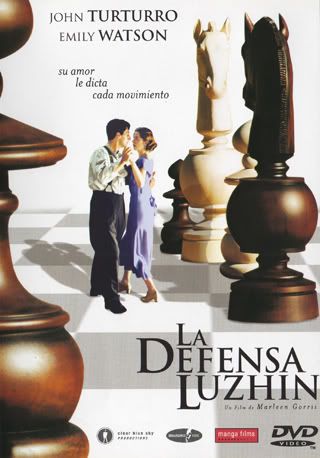
The Luzhin Defence is a 2000 movie starring John Turturro and Emily Watson and was directed by Dutch director Marleen Gorris. The film centres around a mentally-tormented chess grandmaster and the young woman he meets while competing at a world-class tournament in Italy. THE LUZHIN DEFENSE is an adaptation of the Vladimir Nabokov novel shot by the Dutch director Marleen Gorris (Antonia's Line) in 2000.
It's the early 1920s and Aleksandr Ivanovich 'Sascha' Luzhin (Turturro), a gifted but tormented chess player, arrives in a Northern Italian city to compete in an international chess competition. Prior to the tournament he meets Natalia Katkov (Watson) and he falls in love with her almost immediately. She in turn finds his manner to be appealing and they begin to see each other in spite of her mother's disapproval.
A solitary and eccentric man, Luzhin lives only for the chess game, until the day he meets Natalia Katkov, a young Russian woman who's spending her holiday with her mother in the same resort.
Despite her mother's advice, Natalia accepts Luzhin's advances and falls in love with him. The Russian master defeats his first adversaries and enjoys happiness for the first time in his life. He must now face the Italian world champion who has hired Leo Valentinov, Luzhin's former impresario, in order to unhinge the Russian genius.
Stressed by the events, Luzhin undergoes a nervous breakdown after the first day and is asked by his doctor to give up chess if he wants to live a long life. Natalia takes care of him although her parents strongly disapprove her forthcoming marriage with Luzhin. She also must protect him from Valentinov who has not given up the idea to talk Luzhin into finishing his match with his Italian adversary. 


Competing alongside Luzhin in the championship is Dottore Salvatore Turati (Fabio Sartor), who is approached by Leo Valentinov (Stuart Wilson), a Russian, who is Luzhin's former chess tutor from pre-revolutionary Russia. Valentinov tells the Italian that Luzhin cannot handle pressure and he intimates he will make sure that his former prodigy will be unsettled off-table giving Turati a winning chance.
The competition starts badly for Luzhin who is unsettled by the presence of his former friend and coach. He struggles through the early rounds but he soon begins to win again as his relationship with Katkov becomes closer and intimate. She then informs her parents that she is going to marry him. Meanwhile Luzhin goes onto reach the final and face Turati.
But in the finals the Russian Émigré loses out to the time clock, forcing the game to adjourn. However, outside the venue, he is whisked away by an accomplice of Valentinov who abandons him in the countryside. His former teacher knows that this will completely unhinge him because of the memory of his parents' abandonment many years ago. Luzhin wanders aimlessly until he collapses and is found by a group of Blackshirts.
Luzhin is taken to the hospital suffering from complete mental exhaustion. The doctor informs Katkov that he will die if he keeps playing chess as he is addicted to the game and it's consuming his very being. Nevertheless even while recuperating Valentinov comes around with a chess board encouraging Luzhin to finish the match with the Italian, Turati.
Eventually Luzhin leaves the hospital. He and Natalia then agree to marry at the earliest opportunity. However on the morning of the wedding, Luzhin is put into a car with Valentinov, who tells him that there is the small matter of finishing the competition. In terror, Luzhin leaps from the car. Dazed, cut and mentally confused, he stumbles back to the hotel where he tries to dig up a glass chess piece in the grounds, one which he buried years ago, but he does not find it.

Luzhin, who is in his muddied wedding suit, sits in his room as Natalia and the hotel staff try to open the door. But before they can get in, the troubled chess grandmaster throws himself out of his bedroom window and dies. The tragic death is witnessed by Valentinov who has just arrived by car.
The film then concludes in the competition hall where Natalia completes the competition using her fiance's notes. Turati does exactly what Luzhin expected and loses. Katkov and Turati then leave acknowledging the Pyrrhic victory and the genius of Luzhin.
The Luzhin Defence traces the fine lines that exist between passion, obsession, devotion and madness. Like the madness it portrays, the movie takes some time to peak and then everything goes to pieces at once. While the rising action is beautifully laid out and the climax is tragic, it is the film’s conclusion that finally won me over to The Luzhin Defence. Watson’s portrayal of Natalia is nearly flawless — the film is worth watching just for her performance — and it is through her that the audience is drawn into the action. She knows nothing of chess and yet she throws her full support behind the eccentric Luzhin. The return of his former mentor in the midst of the climactic tournament causes Luzhin considerable stress and puts him off his game. While the tournament scenes will appeal to chess fans, they are limited in number and duration (which non-chess fans will appreciate) as the ultimate focus of the film is the romance between Alexander and Natalia.
Nabokov based The Defense on the life of German chess master Curt von Bardeleben who committed suicide by leaping from a window in 1924.
The film was shot entirely on location in Europe. Budapest, Hungary was used for outdoor scenes set in St Petersburg, these included the Széchenyi Chain Bridge, Hungarian National Museum and Heroes' Square. The chess tournament (although in Italy) was shot inside the main hall of Museum of Ethnography, Budapest. In Italy, the hotel scenes were filmed at The Bergamo, Lombardia, and Lake Como.
The novel plays out almost entirely in the mind of Alexander Luzhin (John Turturro), a shabby prodigy so focused on the 64 square grid that the real world fades into shadow. The movie, by contrast, homes in on Luzhin's fiancée (Emily Watson), who struggles for control of her near autistic knight in a larger game against his malignant former tutor (Stuart Wilson).

Thursday, October 1, 2009

Stranger Than Fiction

Chosen By: Leila Moslemi (lilimoslemi@yahoo.com)

What if you realized the importance of your life only days before you lost it? Even knowing when or how you will die (not such a fatuous idea with the completion of the Genome Project) raises difficult questions about how much we really want to know about ourselves.


Such a theme is usually simplified and subsumed into religious-based tales such as It's a Wonderful Life, but taken as an idea in its own right it has considerable intellectual weight. Harold Crick finds himself the main character in a story as it unfolds, but his annoyance quickly shifts gear as he is aware of the author saying, "Little did he know... it would lead to his imminent death."


Stranger Than Fiction is an abstract blend of the saccharine and the absurd. Using Will Ferrell as the bland protagonist searching for meaning in his life, director Marc Forster tries to make sense of the script but it ends up in a land. Harold Crik is a man of infinite numbers, endless calculations, and remarkably few words. Every weekday for twelve years he lives to the timing of his wristwatch. Until Wednesday. On Wednesday, a voice begins narrating his innermost thoughts, and proclaims that a “ seemingly innocuous event” will result in his “imminent death.” In desperation, Harold steps out of his mold, hoping to find the voice and prevent his fate. He doesn’t know the story will end at the exact moment when he has the most to live for. Not only is it a great story, but it’s a masterpiece in dialogue, characterization, and humor.

Each main character has a counterpart, and most of the character’s stories are entangled. Thus one character getting what they want is detrimental to the other character. The main plot in Stranger Than Fiction is about Harold, trying to save himself from the mysterious narrator, and a writer named Karen, trying to figure out how to kill her main character. These two are at odds. Right off you have the main conflict, and a domino effect occurs. characters should face their fears. However, what struck me in watching Stranger Than Fiction was not that Harold had this big climatic moment where he came up against what scared him most, chooses to fight it, and wins. No. The challenge is that each time he comes up against a fear, it’s an opportunity for him to grow a little, push past it a little, and face it a step at a time.


Misdirection is an important part of dialogue. Have characters answer unspoken questions. Have them talk at cross-purposes. Have them hedge. Take a literal question figuratively, or vice versa.


This builds nuance and humor into dialogue. For example, Karen’s publishers send her an “assistant” named Penny to help her finish the book. This creates an immediate animosity, as Karen thinks Penny is a spy for the publishers. And Penny dislikes Karen’s habit of chain-smoking. In a clash of wills, Penny says,


“I suppose you smoked all those cigarettes.”


“No,” Karen says. She raises an eyebrow. “They came pre-smoked.”


Each character in Stranger Than Fiction can be identified by their physical quirks. For example, Harold wears dull V-neck sweaters, and keeps all the furniture in his house off-white. Ana Pascal surrounds herself with color: floral glass plates, mosaic chandeliers, while surrounding herself with activist posters.


Even the street names, business names, and the characters' last names of Stranger Than Fiction are significant - Crick, Pascal, Eiffel, Escher, Banneker, Kronecker, Cayly, etc. are all puns on mathematicians who focused on the innate order of things. The invitation is to ask what is beyond the symmetry of things.


We sense a life-imbuing process that might even be likened to what an actor does with his character; but the film goes a stage further by drawing a comparison with the essentially lifeless, clockwork existence of the IRS auditor whose only escape is discovering love with Pascal. His quest is aided by fictional plot analysis from Professor Jules Hilbert (Dustin Hoffman) and of course begs the question, what is fiction?

Tuesday, September 29, 2009

My sin. My soul. Lo-lee-ta

By: Leila Moslemi (lilimoslemi@yahoo.com)

Humbert is a witty, cultured European with a destructive obsession for young girls. For several years he lives with Lolita, his young stepdaughter, whom he coerces into granting him sexual favors. Nabokov gives Humbert possibly the most socially unacceptable obsession of all: pedophilia. This obsession leads Humbert on a cross country journey to find his precious Lolita upon the discovery that she has run away and decided to marry. It is this Lolita that causes much of the controversy in the movie. Humbert admits that his "pathetic" obsession with Lolita "broke" her life. Humbert writes of himself and Lolita with "a desperate honesty," and comments on "how magically his singing violin can conjure up a tendress, a compassion for Lolita. Humbert dies of heart disease in prison, while awaiting his trial for the murder of Lolita's lover, Clare Quilty.

Humbert characterizes Lolita as "light of my life, fire of my loins. My sin, my soul." from Humbert's point of view, which presents an often idealized but sometimes realistic image of this young girl, with whom he had an incestuous relationship for several years. Initially he defines Lolita as a nymphet, a category of young girls between the age of nine and fourteen. Most often, Humbert projects Lolita as a vision of innocent beauty. After she leaves Humbert, Lolita lives for a time with Clare Quilty. He throws her out after she refuses to allow him to put her in a pornographic film. A few years later she dies during childbirth.

In Deconstructive reading of the themes in “Lolita” there comes three major binary oppositions in my mind:

Appearance / Reality

Victim / Victimization

Anger / Hatred

Humbert's struggle to create art relates to an important theme — appearance versus reality. when he tries to present an idealistic portrait of Lolita and his relationship with her. He continually insists on the innocence of Lolita, which is crucial to his vision of and therefore his desire for her. He insists that "under no circumstances would [he] have interfered with the innocence of a child." She, however, was never quite the innocent he envisions. While at camp, she engaged in sexual activities and thus felt confident enough to seduce Humbert during their first night together. Later, in response to his control of her, she turns into a "cruel manipulator" who demands cash for sexual favors. At the same time, she was more vulnerable than Humbert is willing to admit, and he took advantage of that vulnerability, as when he comforted her after she learned her mother was dead. He offers a symbolic assessment of his destruction of her innocence when he admits that "our long journey had only defiled with a sinuous trail of slime the lovely, trustful, dreamy, enormous country that by then, in retrospect, was no more to us than a collection of dog-eared maps, ruined tour books, old tires, and her sobs in the night — every night, every night — the moment I feigned sleep."

Humbert becomes both victim and victimizer in his relationship with Lolita. He admits that he forced a "singular and bestial cohabitation" on her and "that even the most miserable of family lives was better than the parody of incest, which, in the long run, was the best I could offer the waif." Yet he was also victimized by his uncontrollable obsession with her, which he eloquently chronicles.

Humbert's self-loathing prompts him to create a double who can absolve him of guilt. Clare Quilty becomes the manifestation of his illicit desire for Lolita. When he kills Quilty in a fit of revenge, he tries to erase the pain and suffering he caused her. Previously, his remorse over his obsession with young girls caused several breakdowns and subsequent hospitalizations. Yet, the absurd encounter with Quilty at the end of the novel suggests that Humbert recognizes his responsibility for his and Lolita's tragic relationship.

Each decade since the initial publication of Lolita has presented a new interpretation of the conflict between Humbert Humbert and Lolita. For the 1950's, the interpretation was based on the conservative religious right that felt any relationship between an adult and a child was evil. In the 1960's, the interpretation contained much of the same resentment, but because of the openness of sexuality in society, they felt that much of the fuss was unneeded. Like the 60's, the 1970's showed a similar disregard for the seriousness of the crime Humbert held, they did, however, show more of an understanding of the alienation that both characters must have felt. The 1980's and 1990's have brought a new, more ironic view of the situation. Some no longer see the relationship between Humbert and Lolita as the result of Humbert's obsession, but instead of Lolita's own misgivings. The more subtle theme of satire displayed in the book presented a much more challenging appeal to society. And I believe the satire has been shown in this version at its best.
Friday, September 25, 2009

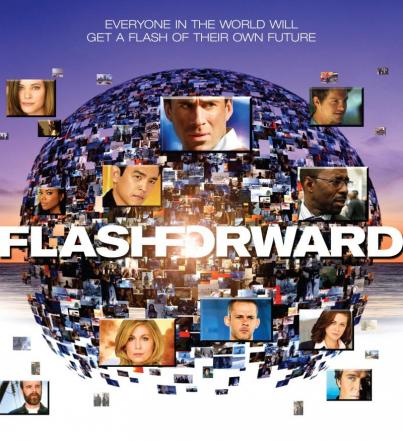
FlashForward, Is it the Lost replacement?


For dedicated fans of TV show Lost, such as myself, the sixth season brings both good and bad news. The good news is there will be answers at the end and the bad news is there will be an end!, as the producers already announced. But before it does, it seems that the channel owners are trying to find an adequate replacement, which is apparently going to be FlashForward.

After the massive hype, the sci-fi drama FlashForward finally launched on ABC channel last Thursday. The big-budget series is based on the 1999 science-fiction novel by Robert J Sawyer, FlashForward. David S. Goyer, the director and one of the writers, is doing his best to make a master piece, appointing stars such as Joseph Finnes, who you might know by Elizabeth or Shakespeare in Love and I personally like his character, Adam, in Killing Me Softly, Dominic Monaghan, a british person playing a british person, who coincidentally provides a link to Lost in which he was Charlie, Finnes's onscreen wife, played by Sonya Walger, Penny in, again, Lost! And very brilliant John Cho, who you might recognize from the Harold & Kumar movies.


The premise is this: one day, every single person in the world blacks out for 2 minutes, 17 seconds. This has devastating effects in the real world – planes, trains and automobiles don't drive themselves, after all; but what soon unfolds is that during this time, everyone has a vision of their own future. Not only that, but their visions are all of their future lives at exactly the same time: 10pm on 29 April 2010. by the end of first episode you will realize this, and that it is not just an accident and it seems some groups or organizations or … did it to people.

The story will unfold from there, promising to look at whether the course of people's futures are changed by what they saw; whether what they saw can be changed by what they do, and what will happen to people who saw nothing at all. It seems like there are hundreds of different ways that this kind of concept can be explored and, hopefully, it will make the series intriguing.


Although David S. Goyer and his writing partner Brannon Braga had the story arcs for five seasons planned out already before FlashForward was picked up by one of the networks, one worry, of course, is always that, being US television, FlashForward might find itself canceled in a heartbeat if the ratings aren't good enough, or adapted to fit the audience's whims if they don't like it. But – in theory at least – there could be enough confidence to see the show through.

Monday, September 21, 2009

The Gf E

Sex is the only word which would come to your mind if someone tells you the film title; The Girlfriend Experience. At first, the movie seemed to have no purpose but entertainment; however, since watching for the second time, one question has been remained on my mind, "what is the price of true love?"


Steven Soderbergh, is not a name that you can easily avoid. Oscar-winner, 46-year-old American director and producer, finally finished the project started almost two years ago, The Girlfriend Experience. Although, only his name is enough to guarantee that a movie is worth watching, two other names, David Levien and Brian Koppelman who have been co-writers since 1998 (Rounders) and are became famous for films such as Runaway Jury (2003) and Ocean's Thirteen (2007), provoked me to catch this movie.

Chelsea, the leading role played by Sasha Grey, is a young woman who earns a living as a high-end escort, selling a “girlfriend experience” to her clients. Even though, it might seem artificial, her job is to make her regulars believe that they have a boyfriend experience. It is not only about sex. As the matter of fact sometimes there is no sex at all.


Among all these men, Chelsea, whose real name is Christine, in her private life has an actual relationship with her partner Chris, who is -at least by himself- considered as a boyfriend! Although he is not meant anything more than another client to Christine. The dramatic sequence of events gives Christine, who is being paid to make love, the opportunity to realize the value of an actual love; Although the director is not concerned with coherent conclusion.


Mr. Soderbergh has made an incredibly plausible film, using non-actors and non-actresses such as Sasha Grey (a professional porn star), Mark Jacobson (a New York magazine writer), Glenn Kenny (a film critic) and Chris Santos, who had vanished since Amongst Friends (1993) . All the casts actually play their real-life characters. In addition, the documentary theme of movie helps it be more credible and authentic.

The good news for this style lovers is that Mr. Soderbergh has already signed for six movies with 2929 Entertainment and it is just the first one.

Saturday, September 19, 2009

Dear God If You Didn't Create Me ….

By: Leila Moslemi (lilimoslemi@yahoo.com)

We have been created, so WE are important.


Eventually he opened his eyes to this world,

Happy of being born,

And shocked of seeing all the beauty on the earth.


He began to leap.

He rolled over flowers, climbed up the trees,

Laid on sea waves, leaped and screamed: Hey I'm here,

It's me, Oxygen. Hey, hey … but …


But nothing moved and no voice was heard.

He wondered and said with a lower voice:


Hey you, trees! Flowers! Butterflies! Rivers! Grand Sea!

Were not any of you expecting me?!

Do any of you see me at all?! Can you hear me?!

But no, nobody paid any attention to him.


He was offended by so much ignoring and

didn't know what to do.

He shouted, shoved them, shook them, but….


No …. Things were quite different.

They were neither inattentive

nor selfish. Our oxygen was invisible.


He just found out that he neither had color,

nor odor, nor shape,

nor was he even visible. He became dejected.

He sat on the seashore, gazed at sea and wept.

He told God:


Dear God, why did you create me at the first place?

What would happen if you didn't create me at all?

What is a creature with no color, no smell, and

No shape good for? You created the nature full of flowers,

trees, water, sea, forest, human and all beauties.

What would happen if

Gave me just a little of these beauties, colors or shapes?


Then he wanted to go back where he came from.

What joy was in this life? Could he

Believe in God's kindness or even love God anymore?

Did God love him at all?


These were thoughts that he was busy with,

So busy that he didn't realize when and how he fell asleep.


My dear; did you want to talk to me?

Were you annoyed of me?

Were you displeased by your creation and wanted

to know the secret to it?

Then listen to me carefully and collect your wits my dear.


Do you know what I was thinking about when

I was creating you?

I was thinking about how the world would look like

After you were born?

What beauties will be created through you? How can you

Appear to be useful and how your life will be joyful to you?

Now take this globe in your hand, spin it,

Watch it carefully, and listen to me.


Oxygen took the globe in his hand excitedly

And watched it.

He shook it and the globe began to spin.

He saw a number of people in the globe.

Then God asked them:

"My creatures tell me what you won't be able to

Survive without, if I take it back from you?"

They all answered immediately:

"Dear God, of course it's oxygen, water and food."


Oxygen? Oxygen?

How can I believe it? Do they know me?

They knew even my name!

What does human have to do with me?

Then he gave it a thought but … "but what my dear?"

"But with water and food, they may not need me anymore."

God smiled and said: "Spin the globe."


Oxygen shouted:

"Wow, what a beautiful forest! What trees! What flowers!

What a various collection of animals!" God said:

"You always wanted to be in their place and you wished to be

one of them and you looked at them with desirous eyes.

These are human food." Then Mother Nature asked

The forest and its animals:

"My dear children, tell me what is essential for your life and

You can't survive without it?"

Everybody clamored and said:

"Oxygen and water!"


How can I believe it?

You mean all these beauties need me?

Me, who neither is visible nor has a shape!

Oh my God …


Burst into tears, he could hardly continue.

He was weeping and laughing, weeping and laughing,

suddenly he felt moving up and down.

Waves woke him up and brought him back to the

Real world. But this time he enjoyed the world.

He enjoyed his existence,

His life, trees, flowers, butterflies, rain and sea.

But still he had two questions unanswered in his mind:


Which of us are of greatest importance, me or water?

And as god said, how can I enjoy my life?

I'm sure that there are answers to these questions too,

But this time I wish to find them myself.

But he needed to know more, before finding answers to

His questions.

So he took off to search for his answers.


He spent days and nights one after another.

He traveled on people's shoulders,

on the wings of butterflies and birds.

He rested under the trees and over the waves, and these

Were the best moments of his life.


Now, our oxygen was a couple of years old.

He had gone to many places, seen so many things

and had so many new experiences.

He had met other natural gases and now life

had a different meaning for him.

Each day of life meant a new experience to him and

Each day added to his knowledge.


On a new day, a day different than other

Beautiful days, he met someone like himself.

Someone with no shape, color or smell,

But different than his kind.

He had a strange feeling about it.

He went forward and reached it:


"Hi".

"Hi".

"I'm Oxygen".

"I'm Hydrogen".

"You look like me, having no color, no shape …"

Hydrogen cut his word and said:


"Yes, I'm useful like you.

I appear in other creatures in different ways like you.

I quench their thirst like you."

"I beg your pardon, but it's not us who quench their thirst.

It's water that makes them fresh and quenches their thirst."

"But this is exactly us.

We mix with each other and form water, and create fog,

rain, river sea and …"


Dear God

If you didn't create me …

And now, here's our mission in life!